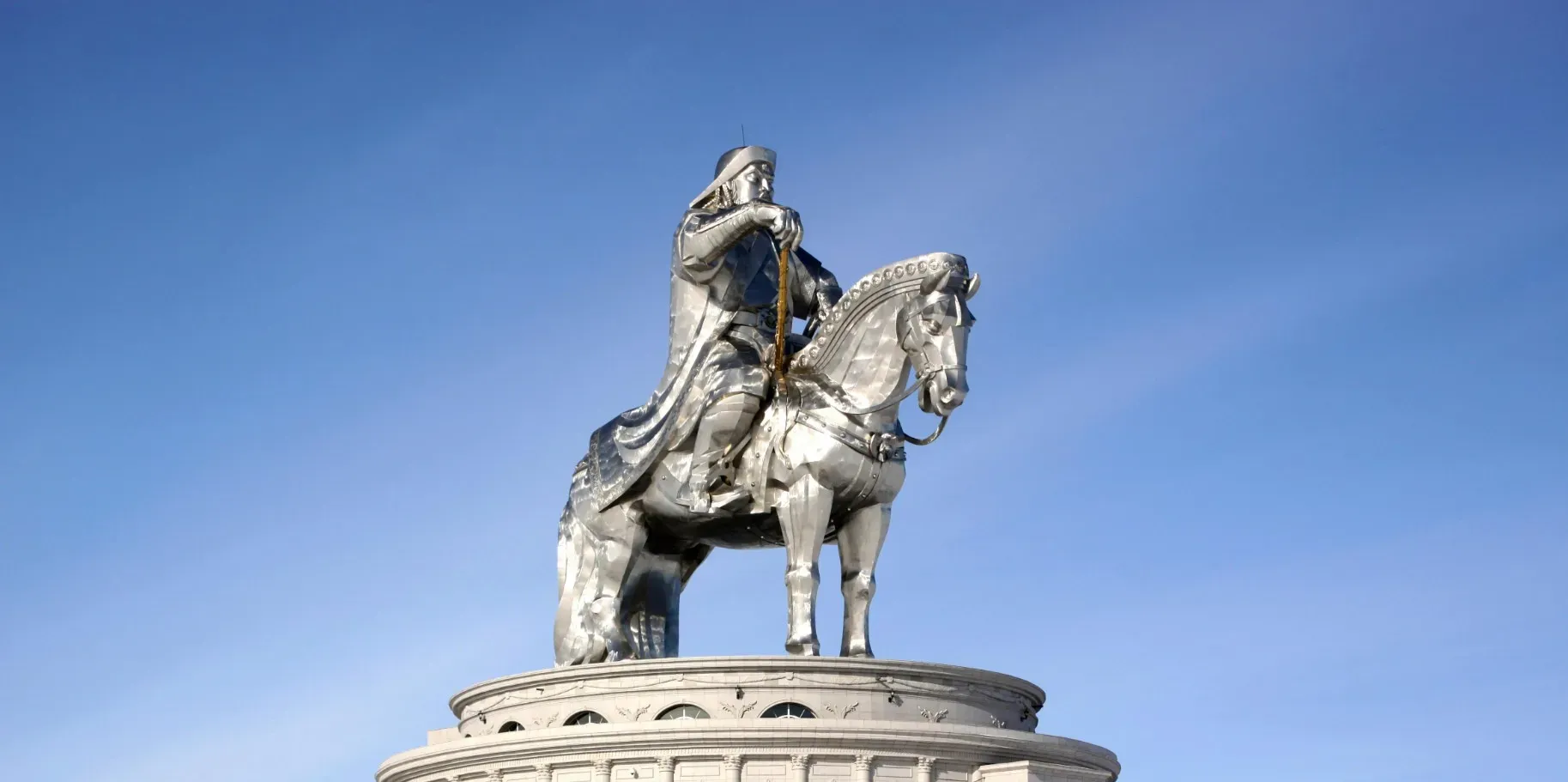
Standing 50 meters tall on the open steppe, this 250-ton stainless steel monument allows visitors to climb directly onto the horse's head for a 360-degree view. Inside the base complex, you can view a massive 9-meter traditional Mongolian boot made from over 200 cowhides and explore an underground archaeological museum.
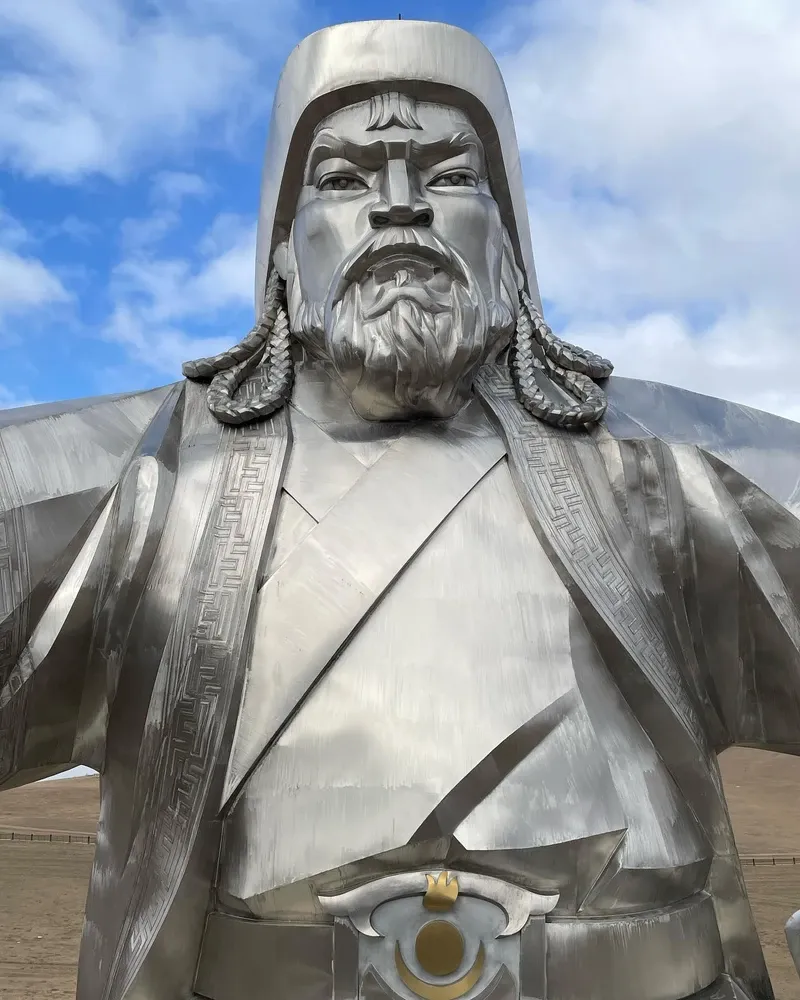
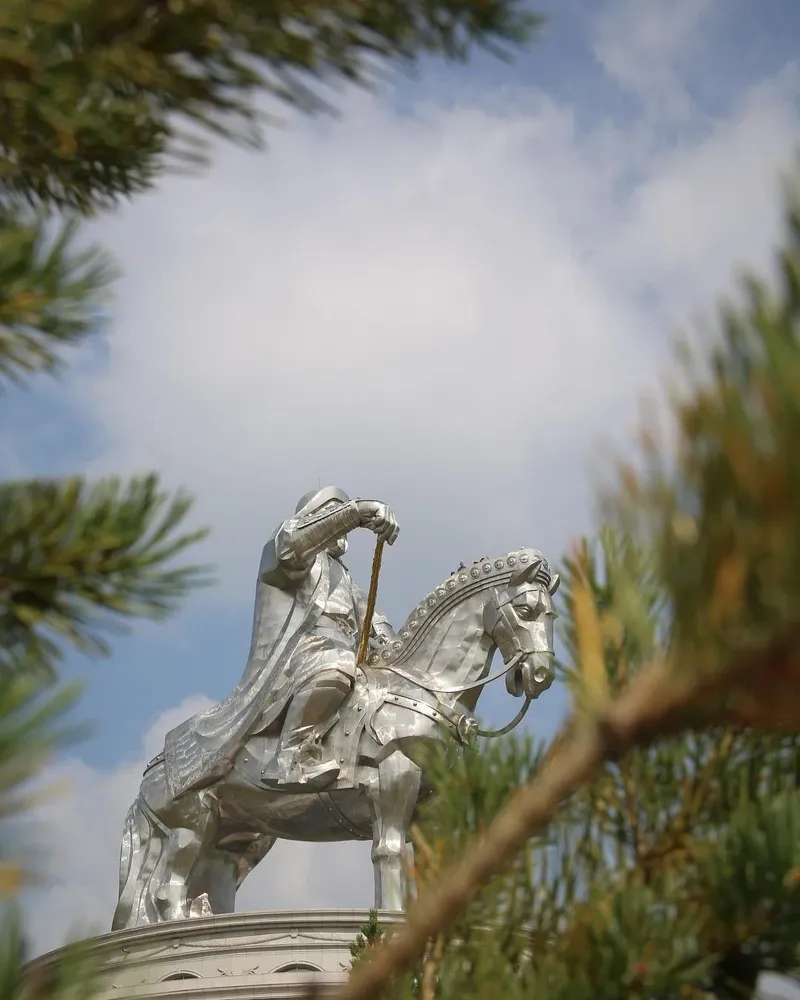
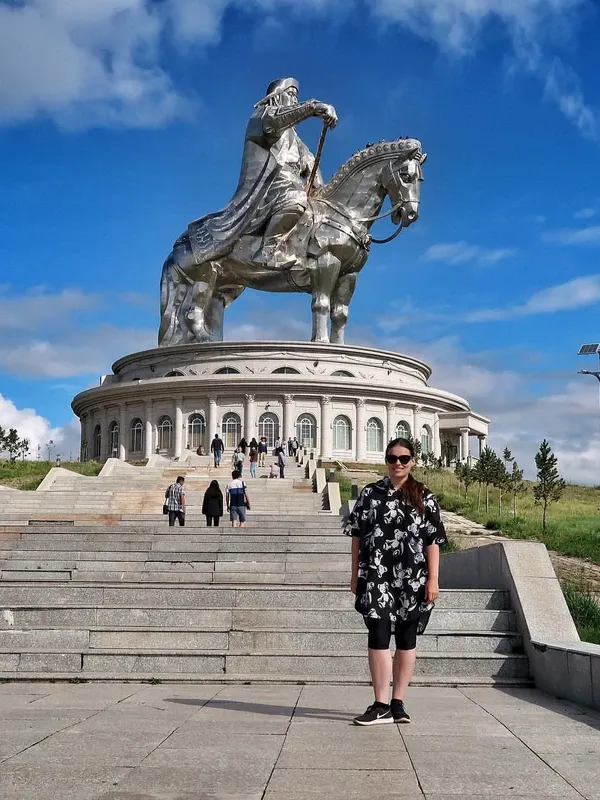
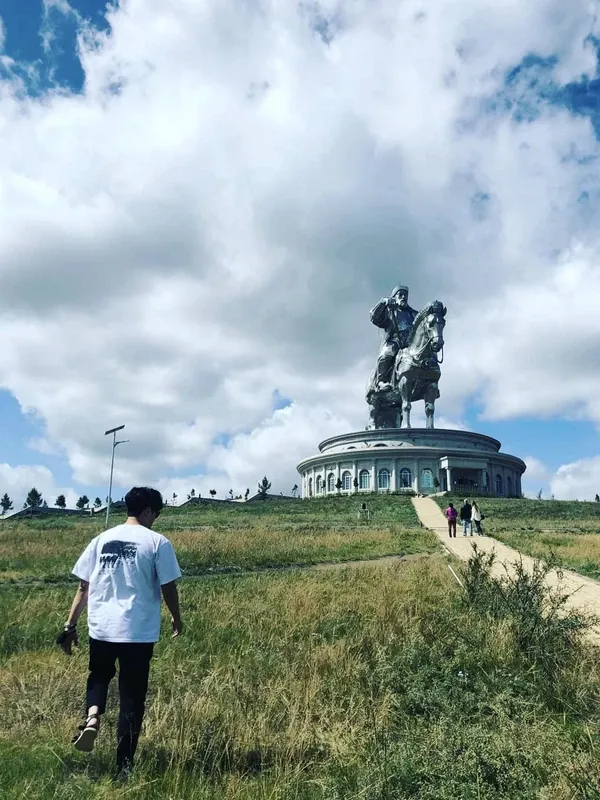
Find Guided ToursThe Genghis Khan Statue Complex, also known as Tsonjin Boldog, is a 40-meter-tall stainless steel equestrian monument located 54 kilometers east of Ulaanbaatar. Sitting atop a 10-meter-high visitor center, the entire structure reaches a total height of 50 meters, making it the largest equestrian statue in the world. Constructed from 250 tons of shimmering stainless steel, the monument depicts the Mongol leader on horseback facing east toward his birthplace in Khentii Province.
The site serves as a symbol of Mongolian national identity, built to commemorate the 800th anniversary of the founding of the Mongol Empire. Its specific location in Tsonjin Boldog is tied to a legend dating back to 1177 AD. According to the story, Genghis Khan, then known as Temujin, found a golden whip in this area while returning from a meeting with Toiril Khan. This discovery was considered an auspicious omen that foreshadowed his future conquests.
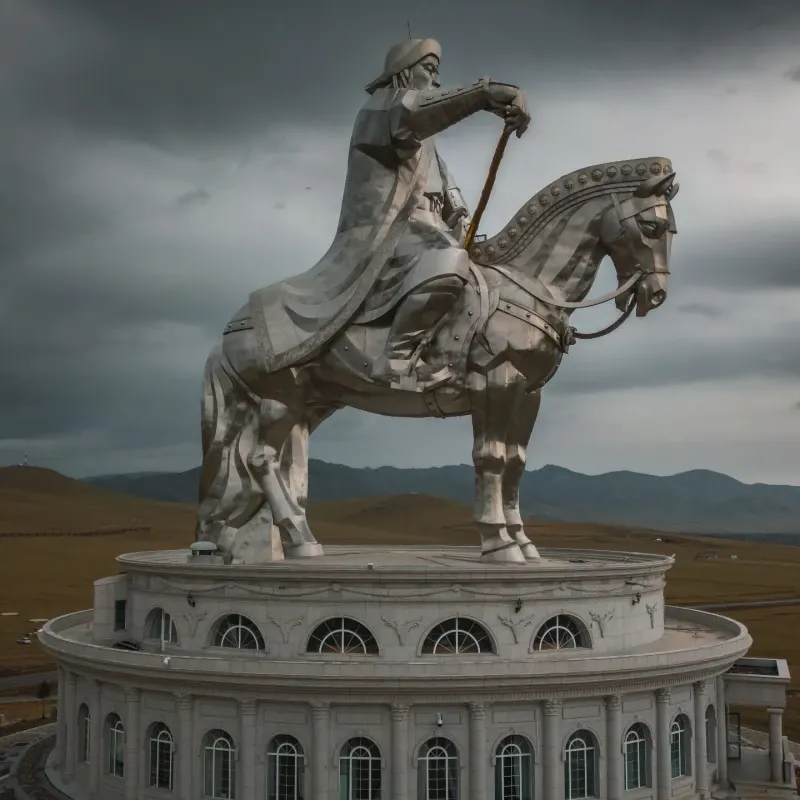
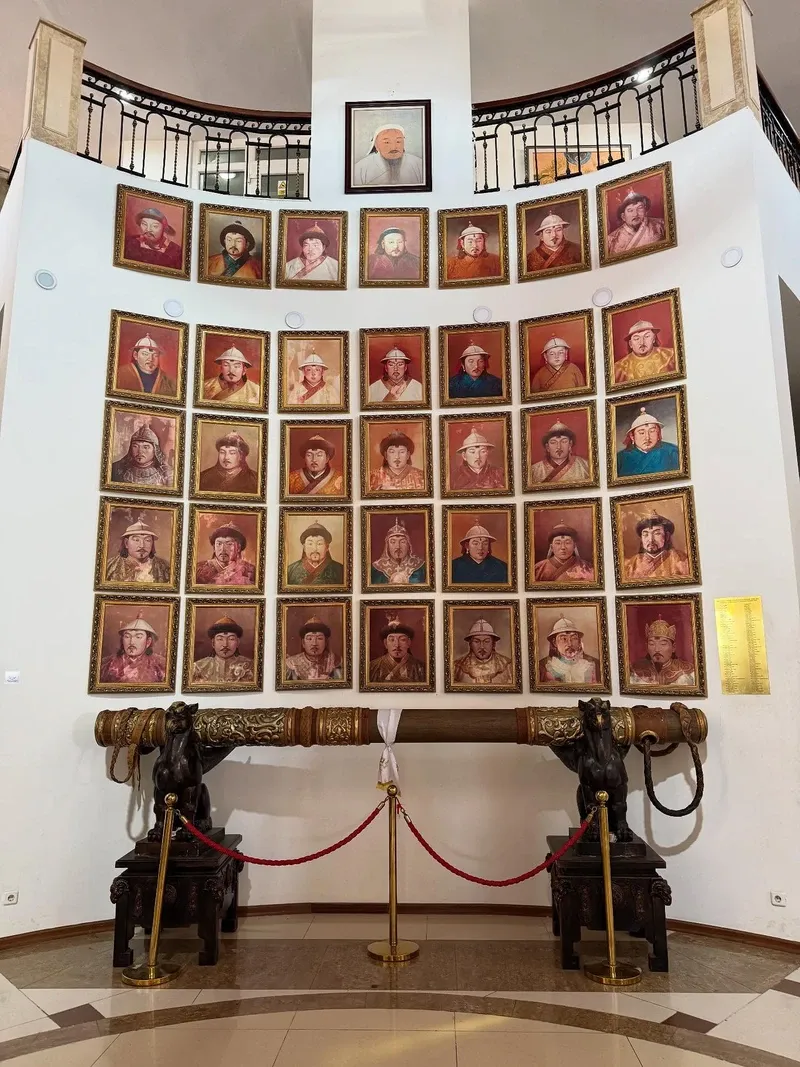
Sculptor D. Erdenebileg and architect J. Enkhjargal designed the colossal structure. The project was funded by the Genco Tourism Bureau and completed in 2008 at a cost of approximately $4.1 million USD. The statue rests on a circular base supported by exactly 36 columns. These columns hold historical weight, representing the 36 Khans of the Mongol Empire, spanning from Genghis Khan to Ligdan Khan.
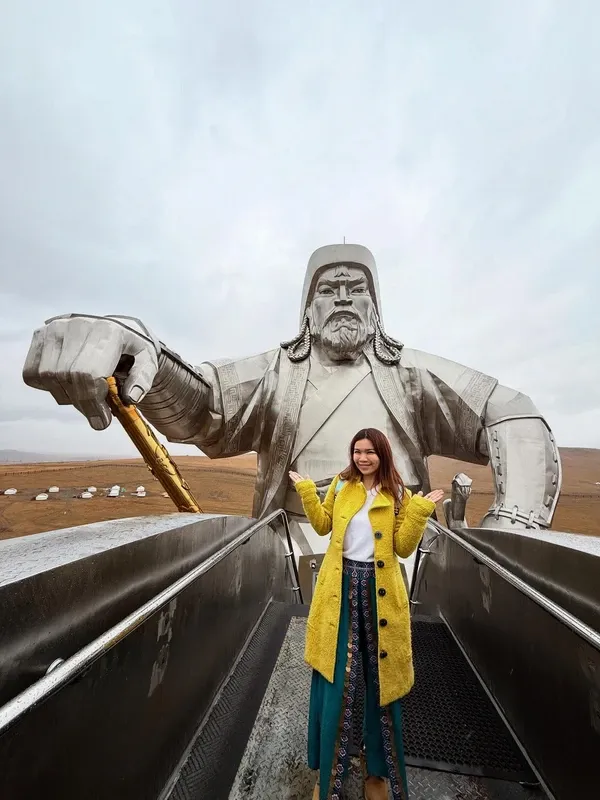
Inside the base, the complex functions as a museum and cultural hub. Visitors can view an underground archaeological museum and a massive 9-meter-tall traditional Mongolian boot made from over 200 cowhides. An elevator transports guests up through the horse's neck, leading to narrow stairs. From there, visitors step onto an observation deck located on the horse's head, providing a 360-degree view of the surrounding 212-hectare complex on the open steppe.
Discover the full history and cultural significance on our About page.
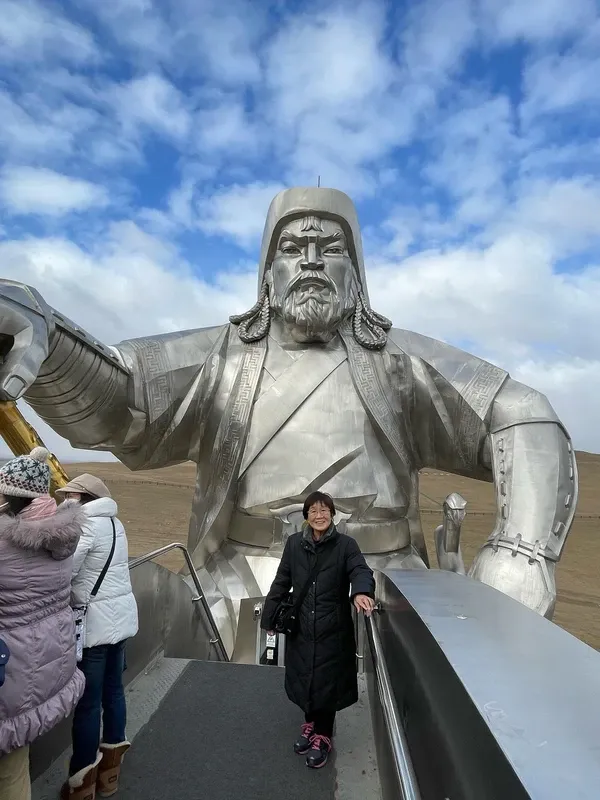
Take the elevator and climb the final narrow stairs to reach the observation deck atop the 40-meter stainless steel monument. Standing on the horse's head exposes you to high winds, but rewards you with a 360-degree view across 212 hectares of the open Mongolian steppe.
Inside the visitor center, you will find the world's largest traditional Mongolian boot. Standing nine meters tall, this massive replica is constructed from more than 200 cowhides. It dominates the indoor space and provides a concrete look at traditional steppe footwear on a monumental scale.
The circular base, supported by 36 columns representing the Khans of the Mongol Empire, houses an archaeological museum. Head below the main level to view ancient Bronze Age tools and detailed Hunnu-era artifacts that document centuries of nomadic history on the steppe.
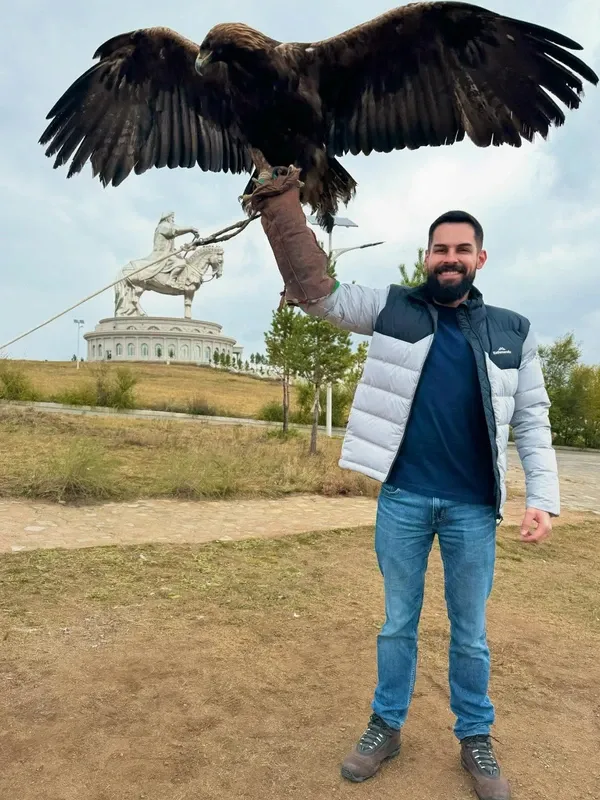
Before leaving the complex, walk through the parking area to interact with local Kazakh eagle hunters. For a small fee paid in local cash, you can hold a golden eagle on your arm or take a short camel ride. Confirm prices with the handlers before interacting.
Hand-picked tours with free cancellation and verified reviews
 Free Cancellation
  Free Cancellation 5h
  Free Cancellation
  Free Cancellation
  Free Cancellation
  Free Cancellation 8h
  Free Cancellation
  Free Cancellation 7h
 The optimal time to visit the Genghis Khan Statue is between May and October, when mild weather permits full access to outdoor activities. The site operates year-round, but winter months bring extreme cold and hazardous ice on the observation deck.
Conditions transition from extreme cold in March to milder weather by May. Windproof layers are essential on the exposed steppe, but late spring allows for outdoor eagle and camel interactions.
Mild weather and green landscapes create optimal conditions for visiting. Despite the warmer season, windproof outerwear remains necessary due to strong winds on the 40-meter-tall statue's observation deck.
September and October provide mild weather for exploring the complex. By November, temperatures plummet and the outdoor stainless steel walkways become extremely slippery with frost and ice.
Temperatures frequently drop below -30°C with high winds. The indoor museum remains open from 10:00 AM to 6:00 PM, but outdoor activities are limited and the observation deck is slippery.
The Genghis Khan Statue Complex is open year-round from 10:00 AM to 6:00 PM.
| Category | Price |
|---|---|
| General Admission | 20,000 MNT |
Tickets are purchased directly on-site; no advance booking or special permits are required for individual tourists. Bring cash (MNT) if you plan to pay for optional activities in the parking area, such as camel rides or holding a golden eagle.
For complete schedules and ticket prices, visit our Hours & Fees page.
The Genghis Khan Statue Complex is located 54 kilometers east of Ulaanbaatar. Visitors must arrange a private car, join a tour, or use a combination of bus and local taxi, as there is no direct public transit route.
📍 Erdene soum, Tuv Province, near the Tuul River
Hiring a private taxi from the Ulaanbaatar city center is the most reliable method for reaching the complex. The drive covers 54 kilometers and takes about one hour each way. Drivers will typically wait for two hours while you explore the site. They provide the full return trip for a single fixed price.
Budget-conscious visitors can start at the Officers' Palace (Oфицеруудын ордoн) and take Bus XO 5-1 to Nalaikh for 500 MNT. From Nalaikh, you must hire a local taxi to complete the final leg to the statue. Finding a taxi from Nalaikh can be infrequent and time-consuming. This method is not recommended if you are on a tight schedule.
Booking a guided tour provides convenient round-trip transportation directly from your hotel. These excursions often bundle the statue visit with a trip to the nearby Gorkhi-Terelj National Park. The package usually includes both transport and lunch. This makes it an efficient way to maximize your time outside the city without negotiating taxi fares.
For detailed transport options and routes, visit our Directions page.
The complex opens at 10:00 AM. Arriving right at opening helps you avoid the large tour groups that typically show up around midday. Since the average visit lasts 1.5 to 2 hours, an early start leaves plenty of time for afternoon activities.
Card machines at the site are frequently unreliable. Bring local currency (MNT) to pay for small souvenirs or parking area activities like camel riding. If you plan to hold a golden eagle, confirm the exact price with handlers beforehand to prevent overcharging.
The monument sits on the exposed Mongolian steppe at an elevation of roughly 1,300 meters. Wind speeds on the observation deck are significantly stronger than at ground level. You should wear a windbreaker and warm layers even during the mild summer months.
There is no direct public bus from Ulaanbaatar for the 54-kilometer trip. Taking public transit requires multiple transfers and is inefficient for tight schedules. Hiring a private taxi costs between 80,000 and 100,000 MNT, and drivers will typically wait the necessary two hours for your return trip.
An elevator inside the statue bypasses most of the 40-meter climb, but it only reaches the horse's chest. Reaching the final observation deck requires navigating narrow stairs. Always check if the elevator is operational upon arrival, as outages mean climbing the entire interior structure on foot.
Winter temperatures between November and March regularly drop below -30°C. The outdoor stainless steel walkways become extremely slippery when covered in frost or ice. Visitors traveling during these months must wear footwear with heavy traction to safely navigate the observation deck.
Known for its alpine scenery and rock climbing opportunities, this park features traditional nomadic ger camps. It is frequently bundled with day tours from the statue.
This massive natural granite formation is shaped exactly like a turtle. It serves as an iconic regional landmark for visitors exploring the surrounding area.
This peaceful Buddhist temple sits against a steep mountain backdrop. Visitors climb exactly 108 steps, which symbolically represent an elephant's trunk, to reach the main complex.
Read what travelers share about their experience visiting Genghis Khan Statue — from practical tips to personal highlights.
The entrance fee is 20,000 MNT per person for access to the museum and the statue. You do not need to book in advance or obtain special entry permits, as individual tourist tickets are purchased directly on-site.
The complex is open year-round from 10:00 AM to 6:00 PM. An average visit takes 1.5 to 2 hours. Arriving right at 10:00 AM helps avoid the large tour groups that typically arrive around midday.
No, there is no direct public bus for the 54-kilometer trip. You can take Bus XO 5-1 from the Officers' Palace to Nalaikh for 500 MNT, then hire a local taxi for approximately 15,000 MNT to reach the complex.
A private taxi from the city center costs between 80,000 and 100,000 MNT. The drive takes one hour, and drivers will usually wait for two hours at the site before providing a return trip for that fixed price.
Bring windproof outerwear and warm layers, as the observation deck on the open steppe is highly exposed to strong winds even in summer. You should also carry local cash (MNT) for camel rides, eagle handling, and souvenirs, because card machines are often unreliable.
The main visitor center and museum levels are completely accessible via ramps. An elevator takes visitors up to the horse's neck, but the final ascent to the observation deck on the horse's head requires climbing narrow stairs.
Yes, the 10-meter-high base houses an archaeological museum, a restaurant, and a giant 9-meter traditional Mongolian boot. Visitors can walk inside the 40-meter stainless steel statue and take an elevator and stairs up to a 360-degree observation deck located on the horse's head.
The site remains open from November to March, but extreme temperatures often drop below -30°C. High winds and slippery ice on the outdoor stainless steel walkways make the observation deck challenging, so the milder months of May to October are generally recommended.
Browse verified tours with free cancellation and instant confirmation.
Find Tours